2026-08-31
Why We Started Scrubsquad — And Why We Still Do It This Way

We hear it more than almost anything else from new clients:
"You're the only cleaning service that offered to come take a look at my home before giving me a quote."
Every time I hear it, I'm genuinely glad we do it. And every time I hear it, I'm also a little baffled — not because it's a complicated thing to do, but because it's such an obvious thing to do. You want to know what a job actually needs before you commit to doing it. The client wants to know who's coming into their home before they commit to letting them in. You meet, you talk, you look at the space together, and then you figure out whether it's a good fit. It takes maybe twenty minutes. It costs nothing.
And apparently, almost nobody else does it.
That tells you something about this industry. And it's a big part of why Scrubsquad exists.
It started before I can really remember
I grew up in housekeeping. Not metaphorically — I literally grew up in it, in the buildings where it happened, watching the people who ran it.
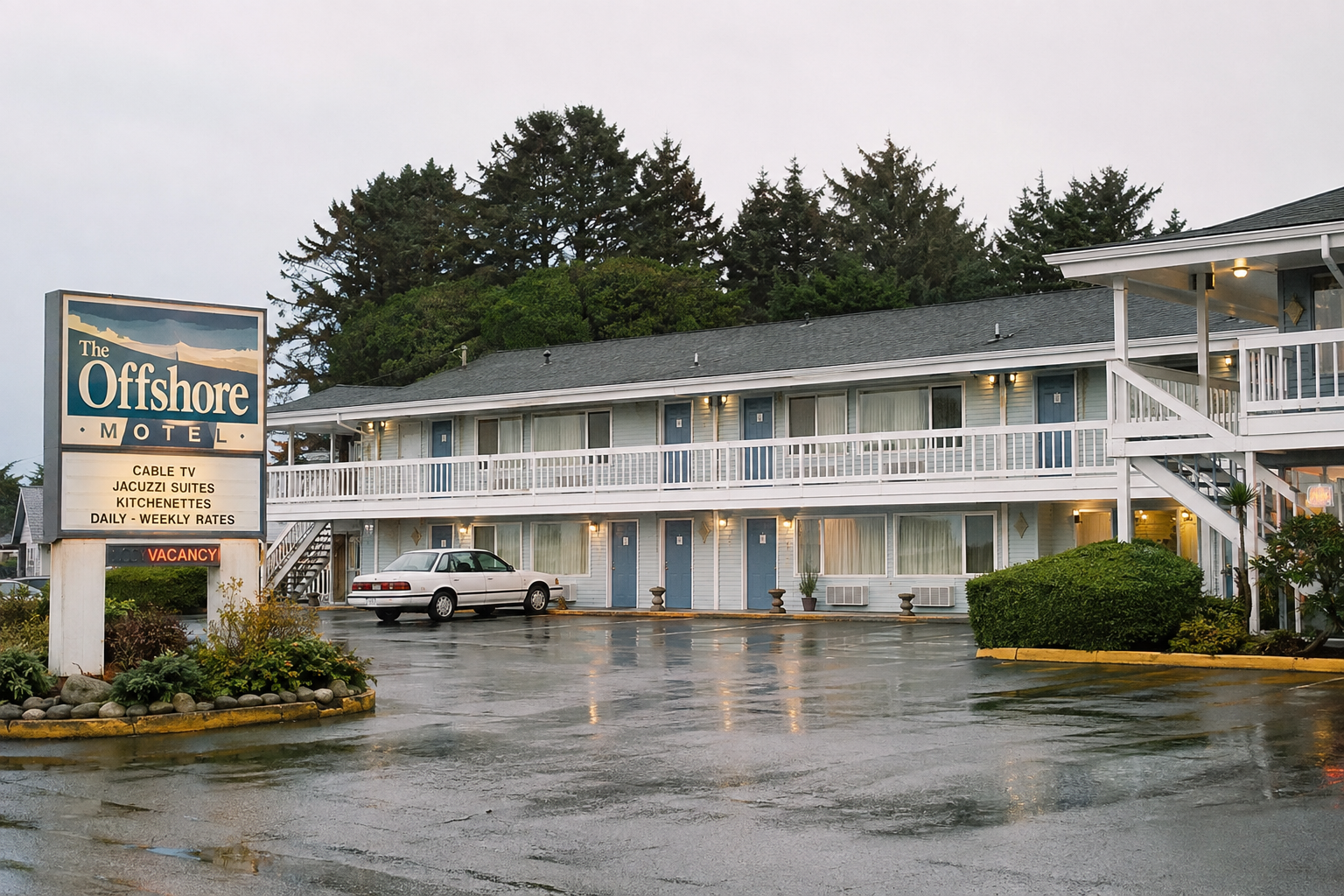
My earliest memories of the industry are from the Offshore motel in Ocean Shores, Washington, where my parents were hired to run the property. My father handled maintenance and the front office. My mother ran housekeeping and the housekeeping team. We — two parents and five kids — lived in the two-bedroom unit above the main office, the one with the full kitchen. My parents worked throughout the day and into the night, and we helped where we could. I want to be clear that this was not child labor exploitation in any concerning sense — nobody was running us ragged — but we weren't exactly exempt from pitching in either. We mostly just failed to meet my mother's standards, which were genuinely exacting, because in the hotel industry they have to be. A spotless room isn't a nice-to-have. It's the product.
What my mother understood, and what I absorbed without fully knowing it at the time, was that the work itself has dignity — and that doing it right matters, not just to the guest, but to the person doing the cleaning.
That lesson would take me a while to fully understand.
The year nobody got paid
My parents went on to work and manage other properties after the Offshore. At one point they were brought on to run a hotel under promises that the family would be well taken care of — good pay, stability, a real opportunity. We moved in. My parents went to work.
For almost an entire year, they weren't paid.
When my parents finally took legal action to recover what they were owed, most of what they won went to the lawyer. They got a fraction of what they'd earned. The people above them in that arrangement faced essentially no consequences.
I've thought about that a lot over the years. The cleaning and hospitality industry tends to attract a certain kind of operator — not all of them, I wouldn't even say most of them, but enough — who sees people willing to work hard as something to extract from rather than reward. My parents were skilled, reliable, and professional, and they were taken advantage of because the leverage was on the other side of the table.
That's a lesson that stayed with me.
Eventually, my parents started their own cleaning company — LDY Incorporated — cleaning residential and commercial properties. I watched that chapter too. And the thing that stood out most wasn't the work itself. It was what the commercial contracts did to our family.
Why we don't do commercial
Commercial cleaning contracts look attractive on paper. The numbers are bigger, the accounts feel more stable, and there's a certain appeal to landing a large commercial client. What they don't advertise is what comes with them.
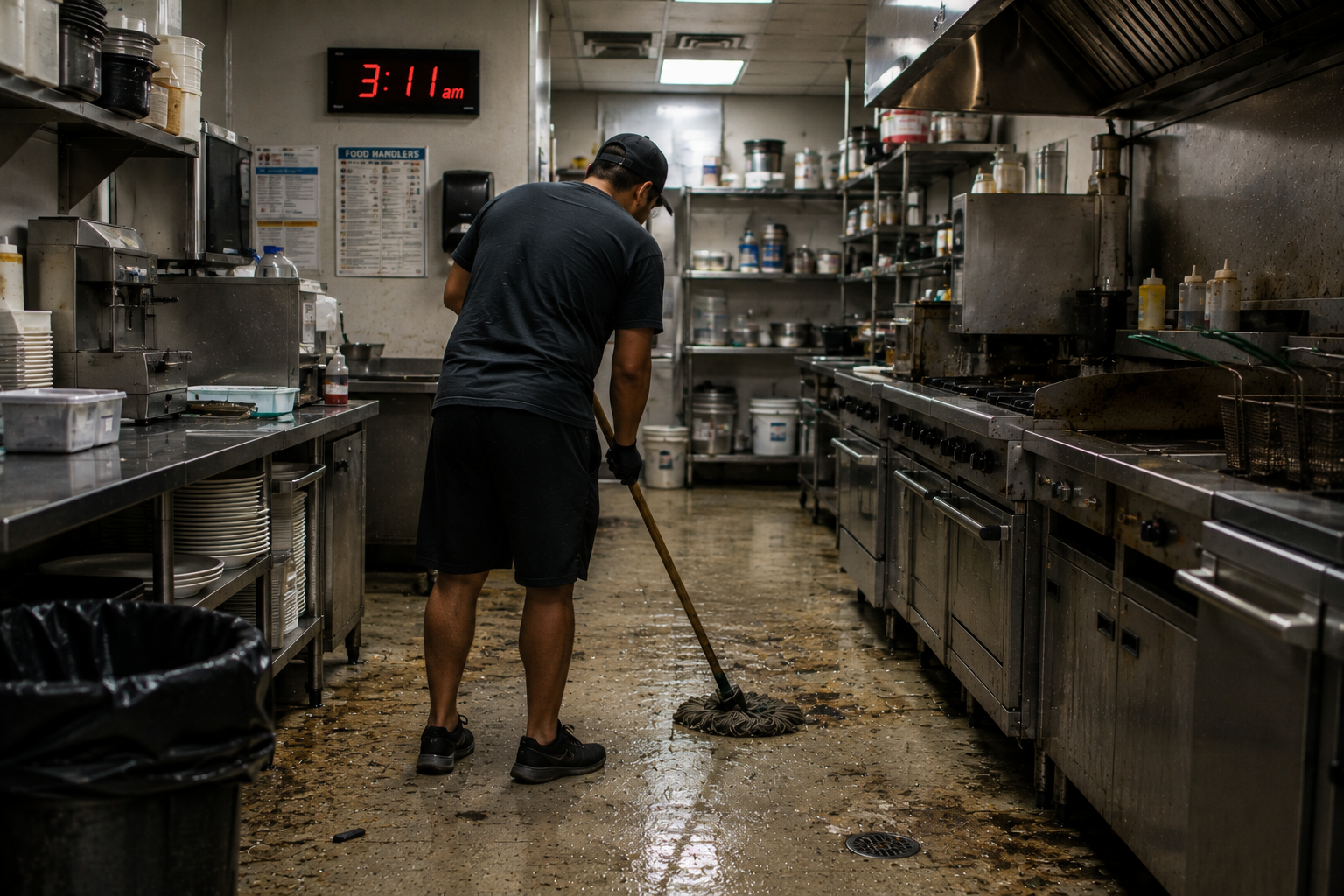
Graveyard shifts. Always graveyard shifts. Offices, retail spaces, commercial buildings — they need to be cleaned when nobody's there, and nobody's there at two in the morning. My parents ran those contracts, and I watched what it did to them. We are not nocturnal creatures. Working against your body's natural rhythms, week after week, month after month, breaks people down in ways that don't fully show up until later. It burnt my parents out. It made finding and keeping reliable employees nearly impossible — because most people would also prefer not to work graveyard shifts, and the ones who take those jobs are often in circumstances that make them vulnerable.
And then there's the pricing. Commercial contracts go to the lowest bidder. Always. Which means the pressure is always downward — on rates, on wages, on the time allocated to actually do the job. My parents were good at what they did and they still found those contracts grinding and unsustainable.
I decided a long time ago that if I ever started my own company, it would be residential, and it would be day shifts. I want my teammates to go home to their families at the end of a workday. I want us to be able to do the job right without watching the clock like our lives depend on it.
What I found working for other companies

When I started working residential cleaning jobs in the Greater Seattle area for various companies, I thought I was entering a different world from the one my parents had navigated. I was wrong about that.
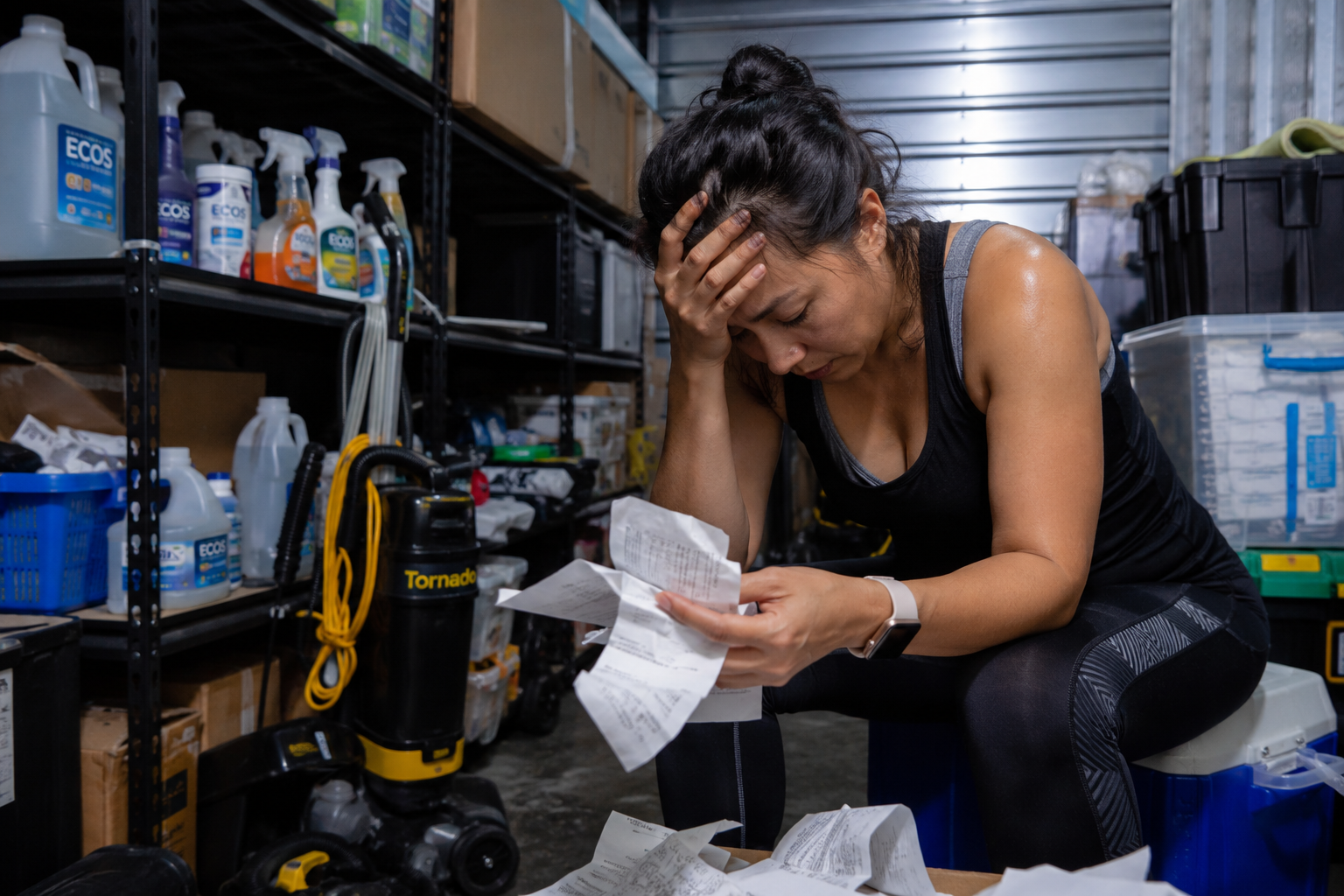
What I found was an industry increasingly dominated by a particular kind of operation: hedge fund and absentee-owned cleaning companies, run remotely by investors who have never worked a jobsite as a housekeeper and never see the homes in person. The model works like this. Someone remotely rents a storage unit, fills it with cleaning supplies, and immediately moves toward having others run the operation for them — a manager hired to handle logistics, cleaners recruited online and dispatched to jobs — while the ownership sits at a distance and takes the majority of the revenue. The cost of the labor actually doing the work is a small fraction of their stated costs, with the vast majority of what clients pay seized as profit at the top. Quotes go out based on bedroom count, bathroom count, and a rough square footage estimate — nobody comes to look at the space, nobody talks to the client about what they actually need. A number gets generated and sent. If the client accepts it, the company then figures out what they want to pay the cleaner and tells them: you have X amount of time to clean that unit.
X is never enough.
I lived this. A client accepts a quote built on approximations, has expectations built on promises, and the cleaner — me — shows up to a space they've never seen, with a clock already running, expected to meet a standard nobody has actually defined. Everything comes out of the car in one trip — cleaning caddy, vacuum, large duffel bag on the back — because there's no time for two. The cleaning happens fast because it has to. The oven cleaner comes out — and if you've never worked with industrial oven cleaner for a living, the fumes are something else entirely, burning eyes and lungs in an enclosed space with whatever ventilation the client happens to have — and then it's on to the next job, and the one after that.
By the end of a day like that, your back is wrecked, your lungs are angry, and after you've accounted for fuel and the wear on your personal vehicle — because you're typically transporting yourself and all the equipment in your own car — what's left isn't much above minimum wage.
The clients aren't being served well either. The promises don't get kept. The expectations don't get met. The cleaner isn't rushing because they don't care; they're rushing because they were given no choice. It's a system that fails everyone at the bottom of it while the people at the top collect the margin.
I'd seen this kind of arrangement before, in the industry I grew up in. The leverage is always on the same side of the table.
The clown show that finally did it
The last company I worked for before starting Scrubsquad advertised itself as fully local — Seattle-based, no subcontracting, a real community cleaning company. It was none of those things. The work was subcontracted out. The company wasn't run in any serious manner. There was no real regard for worker wellbeing, no real regard for what clients actually needed, and a general organizational chaos that made every job harder than it had to be. Deceptive to workers about pay. Deceptive to clients about what would be delivered. Deceptive about what the company even was.
And I remember thinking: if this can operate, what am I waiting for?
Not out of arrogance — I knew starting a company was going to be hard — but out of a genuine realization that the bar wasn't as high as I'd imagined. That I could start something honest and decent without so much fear. That the main thing standing between me and doing this right was just deciding to do it.
I started Scrubsquad in early 2025. It's been, in the best possible way, a non-stop education ever since.
What Scrubsquad is actually built on
The walk-in estimate isn't a sales tactic. It's the foundation of how we work.
Every new client gets a free walkthrough before we give them a quote. I come out, we meet in person, I look at the space, and — most importantly — I listen. What bothers you most? What have other cleaners missed or gotten wrong? What matters to you about the space? The reality is that what a client submits on a form is almost never the whole story, and the true story isn't something you can learn without actually meeting them and walking the space together.
Here's a recent example. I got a lead the other day for a home with five bedrooms and six bathrooms — on paper, a large and expensive job. Had I quoted based on that form alone, the number would have been significant. When I met with the owner and walked through the space, it turned out they really only needed two of the bedrooms and two of the bathrooms cleaned, along with the hallways and an oven cleaning. They'd listed everything because they didn't want to miscommunicate the size of the house — a completely reasonable instinct — and they had no way of knowing how to describe what they actually needed in square footage terms. Neither would I have, without being there. You simply cannot figure that out from a form.
Sometimes what we find on a walkthrough is that we can't deliver what the client is genuinely hoping for. Not every job is the right job for us. And when that's the case, I'd rather say so clearly and honestly than nod along, take the money, and leave someone disappointed. Saying "we're probably not the right fit for this" is one of the more honest things a service company can do, and it's something the quote-from-a-spreadsheet model is structurally incapable of.
The wage philosophy is just as simple. The majority of every job's payout is split amongst the team that does the job, with a small portion going toward our bills, advertising, and future investment. I don't believe in paying a "living wage" as some kind of achievement — that sounds like the bare minimum an employer in this industry should do anyway. What I care about is a prosperous wage — one where everyone involved sees their life actually improve from doing this work, not just survive it.
Here's the thing that genuinely surprised me when I ran the numbers: it is completely possible to charge fair market rates, pay above industry standard wages, and still run a sustainable business. It's only impossible if someone at the top is trying to extract a large personal profit from the labor of the people doing the actual cleaning. I'm not trying to do that. I'm trying to build something modest, steady, and genuinely good for everyone in it.
To my fellow small operators
If you run a small cleaning company, I want to talk to you for a moment.
I've come to realize that what I built Scrubsquad to be is actually what most small cleaning companies are — or are trying to be. People who got into this because they knew it could be done better, more honestly, more fairly. People who got tired of working for operations that didn't care about the worker or the client. People who decided to just do it right.
Our battle is a slow one. We're typically one or two operators trying to keep up with every facet of running a business — the cleaning itself, the scheduling, the client communication, the marketing, the bookkeeping, the equipment, the endless learning curve of just getting better at all of it. The absentee operators have marketing budgets and algorithmic advantages and can flood the market with quotes that seem to come from nowhere. We compete with authenticity, with presence, with the fact that when something goes wrong, the person who answers the phone is the same person who cleaned the house.
That's not nothing. In fact, I think it's everything.
Part of what this blog is for is to be useful to you — to share what I've found that works, what hasn't, what I'm still figuring out, and hopefully to be a small part of keeping the burnout and the jaded feeling at bay for people who have tried so hard for so long and deserve to see it pay off. I genuinely want to hear your stories too. What made you start? What have you learned? What are you still trying to solve?
We're not competing with each other. We're competing with a model that doesn't care about the people in it. Every client who chooses a small, honest, locally-operated cleaning company over a faceless franchise or an algorithm-run dispatch service is a vote for a better version of this industry.
We're casting those votes one clean home at a time.
If you're a new client curious about what a Scrubsquad walkthrough actually looks like, or a fellow small cleaning company operator who wants to connect, reach out at info@seattlescrubsquad.com — we mean it.